Embarking on the journey of graphic design can feel like stepping into a vibrant, visual language, a realm where ideas are transformed into compelling images and impactful communication. For students, understanding the foundational principles of this dynamic field is crucial for unlocking their creative potential and effectively translating their concepts into tangible designs. This exploration examines the core elements that make graphic design so powerful, offering a roadmap for aspiring designers to navigate this exciting discipline.
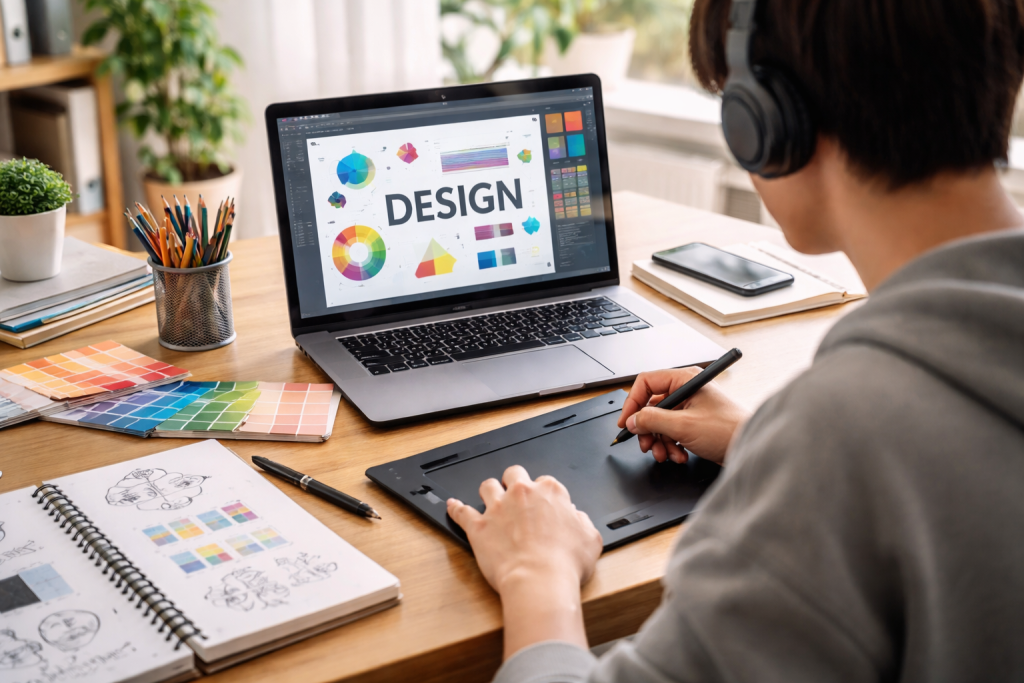
At its heart, graphic design is the art and practice of planning and projecting ideas and experiences with visual and textual content. It’s about solving problems visually, communicating messages clearly, and evoking emotions. Before diving into intricate techniques, a firm grasp of the fundamental purpose and objectives of graphic design is paramount. It’s not simply about making things look pretty; it’s about purposeful visual communication that serves a specific goal, whether it’s to inform, persuade, entertain, or build a brand.
The Role of Visual Communication
Graphic design is inherently about communication. It’s the bridge between a message and its audience. Every design, from a simple business card to a complex website, carries a message. Understanding who the intended audience is and what you want to communicate to them is the first step in any design process. Without this clarity, even the most aesthetically pleasing design can fall flat.
Purpose and Objectives in Design
Every design project has a reason for existing. Is it to sell a product, raise awareness for a cause, guide users through an interface, or simply beautify a space? Identifying the primary purpose and secondary objectives of a design will inform every decision made throughout the creation process, from color choices to font selection and layout.
The Graphic Designer’s Toolkit
While technology provides the tools, the designer’s mind is the most important asset. However, understanding the fundamental tools and software commonly used in graphic design is beneficial. This includes design software like Adobe Photoshop, Illustrator, and InDesign, but also a deeper understanding of how to wield these tools to achieve specific visual outcomes, not just to operate them.
The scaffolding of any effective graphic design rests upon a set of fundamental elements. These are the building blocks that designers manipulate to create visual appeals and convey meaning. Mastering these elements is akin to a writer understanding grammar and syntax—they provide the structure and vocabulary for visual expression.
Line: The Foundation of Form
Lines are the most basic of all elements. They can be straight, curved, thick, thin, dashed, or solid. Lines are used to define shapes, create texture, suggest movement, and divide space. The weight and direction of a line can convey different emotions and create different visual effects, from a sense of energy and dynamism with sharp, diagonal lines to tranquility and stability with horizontal and vertical ones.
Shape: Defining Forms in Space
Shapes are two-dimensional areas defined by lines or color. They can be geometric, like squares and circles, or organic, like those found in nature. Shapes are crucial for creating recognizable forms and adding visual interest. The interaction of different shapes can create balance, tension, or harmony within a design.
Color: Evoking Emotion and Meaning
Color is perhaps the most powerful element in graphic design for evoking emotion and conveying meaning. It has the ability to attract attention, create mood, and even influence perception. Understanding the psychology of color and how different hues interact is essential for creating impactful designs.
Texture: Adding Tactile and Visual Depth
Texture refers to the surface quality of an object, both real and implied. In graphic design, texture can be created through patterns, gradients, or the use of imagery. It adds a tactile dimension and can make a design feel more realistic or more abstract, depending on the intended effect.
Space: The Canvas of Creativity
Space, also known as negative space or white space, is the area around, between, and within elements. It is not merely emptiness but an active component of design. Properly utilized space can improve readability, create focus, and enhance the overall aesthetic of a design by giving elements room to breathe and preventing visual clutter.
Typography, the art and technique of arranging type, is a cornerstone of effective graphic design. It’s not just about choosing a font; it’s about selecting typefaces that complement the message, are legible, and contribute to the overall aesthetic and tone of the design. The careful consideration of typography can elevate a design from ordinary to extraordinary.
Typefaces versus Fonts: A Clarification
It’s common to use “typeface” and “font” interchangeably, but there’s a distinction. A typeface is a design of letterforms (e.g., Helvetica, Times New Roman). A font is a particular weight, style, and size of a typeface (e.g., Helvetica Bold 12 pt). Understanding this nuance helps in appreciating the detailed choices designers make.
Readability and Legibility: The Pillars of Success
Readability refers to how easily the reader can understand the written text, while legibility refers to how easily individual characters can be distinguished. A well-chosen typeface and appropriate spacing are paramount for ensuring that the message is easily consumed by the intended audience, regardless of the complexity of the design.
Serif vs. Sans-Serif: Characterizing Styles
Serif typefaces have small decorative strokes (serifs) at the ends of the main strokes of letters, often associated with tradition and formality. Sans-serif typefaces lack these strokes, generally conveying a more modern and clean aesthetic. The choice between them significantly impacts the mood and perception of a design.
Hierarchy and Emphasis Through Type
Typography is a powerful tool for establishing visual hierarchy. By varying font weights, sizes, and styles, designers can guide the reader’s eye through the content, highlighting important information and creating a clear path of comprehension.
Color is a potent force in graphic design, capable of eliciting a wide range of emotional responses and conveying subtle meanings. A fundamental understanding of color theory unlocks the ability to harness this power consciously, creating designs that are not only visually appealing but also psychologically impactful.
The Color Wheel: A Universal Language
The color wheel is a foundational tool, illustrating the relationships between primary, secondary, and tertiary colors. It helps designers understand color harmonies and contrasts, guiding decisions on how different colors can be combined effectively.
Color Harmonies: Creating Visual Appeal
Different color combinations create different moods and aesthetics. Analogous colors (those next to each other on the color wheel) create a sense of harmony and calmness. Complementary colors (opposite each other) create strong contrast and visual energy. Triadic colors (evenly spaced on the wheel) offer vibrant and balanced palettes.
Color Psychology: The Emotional Impact
Colors carry inherent psychological associations. Red, for instance, can signify passion, urgency, or danger, while blue often evokes feelings of trust, serenity, or professionalism. Understanding these associations allows designers to imbue their work with specific emotional resonance.
Color Contrast and Accessibility
Effective use of color contrast is vital not only for visual appeal but also for accessibility. Ensuring sufficient contrast between text and background is crucial for readability, especially for individuals with visual impairments. This consideration is a hallmark of thoughtful and inclusive design.
Beyond individual elements, the way these elements are arranged within a design is what truly brings it to life. Composition and layout are the art of organizing visual information in a way that is both aesthetically pleasing and functionally effective, guiding the viewer’s eye and ensuring the message is communicated clearly and efficiently.
Balance and Symmetry: Creating Harmony
Balance refers to the distribution of visual weight in a design. Symmetrical balance creates a sense of order and formality, while asymmetrical balance, which uses unequal elements to achieve equilibrium, can feel more dynamic and modern. Both methods are powerful tools for creating a stable and engaging composition.
Rhythm and Movement: Directing the Eye
Rhythm in design is created through the repetition or alternation of visual elements, creating a sense of flow and guiding the viewer’s eye through the composition. This can be achieved through patterns, repeated shapes, or a dynamic arrangement of elements that suggests movement.
Proximity and Alignment: Organizing Information
Proximity is the principle that closely related items should be grouped together, enhancing organization and reducing visual clutter. Alignment, the placement of elements along common edges or centers, creates a sense of order and professionalism, helping to unify the design.
Grids and Systems: Building Structure
Grids provide an underlying structure for layouts, ensuring consistency and order. They create a framework for placing elements, facilitating visual harmony and making complex designs more manageable and aesthetically coherent.
Imagery and illustration are powerful tools that can enhance understanding, evoke emotion, and add personality to a graphic design. Whether it’s photographs, vector graphics, or hand-drawn illustrations, their strategic use can significantly impact the effectiveness and appeal of a design.
Photography: Capturing Reality and Emotion
Photography allows designers to bring real-world elements into their designs, offering authenticity and emotional resonance. The choice of subject matter, lighting, and composition in a photograph can drastically alter the message and mood of a design.
Illustration: Unleashing Imagination and Style
Illustration offers a boundless realm of creative expression, allowing designers to create unique visual narratives and styles. From cartoonish characters to intricate technical drawings, illustrations can simplify complex ideas, inject personality, and stand out in a crowded visual landscape.
The Synergy of Text and Image
The most compelling designs often achieve a harmonious synergy between text and imagery. The visual elements should complement and reinforce the message conveyed by the words, and vice versa. Understanding how these two components interact is key to cohesive and impactful design.
Sourcing and Rights: Ethical Considerations
When using imagery, it is crucial to be aware of copyright and licensing. Using imagery without proper permission can lead to legal issues. Understanding how to source images ethically and legally, whether through stock photo sites, original photography, or custom illustrations, is a vital part of responsible design practice.
Creativity isn’t purely an innate gift; it’s a muscle that can be strengthened through a structured and consistent process. Developing a personal design process that encourages experimentation, iteration, and thoughtful problem-solving is essential for any aspiring graphic designer.
Research and Inspiration: Laying the Groundwork
Before putting pen to digital paper, thorough research and seeking inspiration are critical. This involves understanding the brief, the target audience, and the competitive landscape. Looking at the work of other designers, exploring different art forms, and observing the world around you can spark innovative ideas.
Brainstorming and Sketching: Visualizing Concepts
Don’t be afraid to generate a multitude of ideas, even those that seem unconventional. Sketching is a rapid way to explore different visual concepts and compositions without the constraints of software. It allows for free-flowing exploration and helps in identifying promising directions.
Prototyping and Iteration: Refining the Vision
The first draft is rarely the final product. Creating prototypes and being open to iteration is fundamental. This involves testing designs, gathering feedback, and making adjustments based on what works and what doesn’t. This iterative cycle is where many great designs are honed.
Seeking Feedback and Critiques: Gaining Perspective
Constructive criticism is invaluable for growth. Sharing your work with peers, mentors, or even a trusted audience can provide fresh perspectives and highlight areas for improvement that you might have overlooked. Learning to accept and act on feedback is a sign of maturity as a designer.
By embracing these foundational principles and consistently practicing, students can unlock their inherent creativity and embark on a fulfilling journey into the dynamic world of graphic design. The ability to translate ideas into compelling visual narratives is a skill that transcends disciplines and empowers individuals to communicate powerfully in an increasingly visual world.